Foldable iPhone: What We Actually Know So Far
iBrave Team · April 2026
Apple has been making the same iPhone for 18 years. A slab of glass, rounded corners, one screen. So when credible reports started circulating that a foldable iPhone is genuinely happening — and that it’s coming this year — it got our attention. Not just as people who follow Apple closely, but as a repair shop that will eventually be opening one of these up.
Here’s what we actually know👇
Foldable iPhone: What We Actually Know So Far
iBrave Team · April 2026
Apple has been making the same iPhone for 18 years. A slab of glass, rounded corners, one screen. So when credible reports started circulating that a foldable iPhone is genuinely happening — and that it’s coming this year — it got our attention. Not just as people who follow Apple closely, but as a repair shop that will eventually be opening one of these up.
Here’s what we actually know👇
The Phone Is Real
This is no longer a rumour. A foldable iPhone is in engineering testing right now, heading toward a planned September 2026 launch alongside the iPhone 18 Pro lineup. Apple has been working on this for years, and the device is far enough along that supply chain partners are already involved.
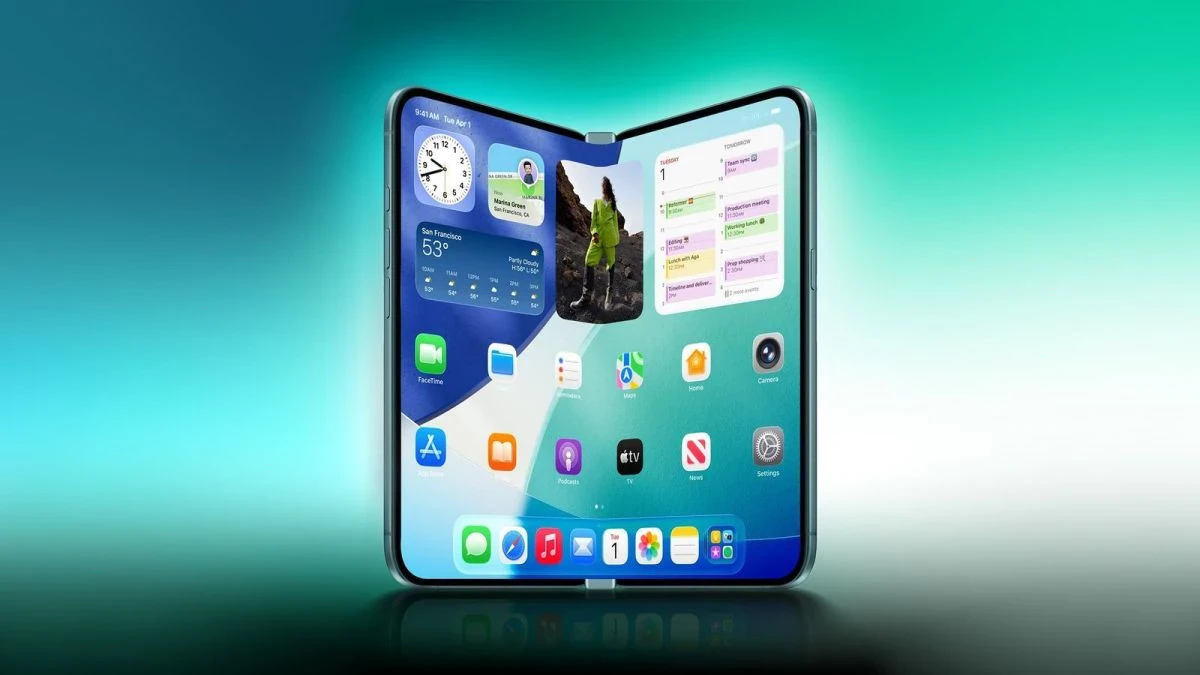
The design: it opens like a book. A 5.49-inch outer display for everyday use, and a 7.76-inch inner screen when unfolded. Apple apparently put significant effort into minimising the crease that appears on every other foldable phone on the market — and claims the result is nearly invisible. Whether that holds up in real use, we’ll see.
Price is expected to start above $2,000. The first production run is reportedly small — around 3 million units. Apple clearly doesn’t want a repeat of the Vision Pro situation: a product that launched to enormous attention but couldn’t reach most people who wanted one.
The Phone Is Real
This is no longer a rumour. A foldable iPhone is in engineering testing right now, heading toward a planned September 2026 launch alongside the iPhone 18 Pro lineup. Apple has been working on this for years, and the device is far enough along that supply chain partners are already involved.
The design: it opens like a book. A 5.49-inch outer display for everyday use, and a 7.76-inch inner screen when unfolded. Apple apparently put significant effort into minimising the crease that appears on every other foldable phone on the market — and claims the result is nearly invisible. Whether that holds up in real use, we’ll see.
Price is expected to start above $2,000. The first production run is reportedly small — around 3 million units. Apple clearly doesn’t want a repeat of the Vision Pro situation: a product that launched to enormous attention but couldn’t reach most people who wanted one.
Where Things Got Complicated
A few weeks ago, reports emerged that Apple had hit setbacks during the engineering test phase. Three problem areas — none of them surprising for a foldable device: a hinge that needs to survive thousands of folds, a display that has to hold up through all of them, and the challenge of fitting a battery, cameras, and sensors into an unusually thin body.
The hinge material decision reportedly hadn’t been finalised — the choice sitting between liquid metal and a 3D-printed titanium alloy. That kind of decision late in the process is a sign that engineering is still working through fundamental questions.
These reports caused Apple’s stock to drop nearly 5% in a single day.
Where Things Got Complicated
A few weeks ago, reports emerged that Apple had hit setbacks during the engineering test phase. Three problem areas — none of them surprising for a foldable device: a hinge that needs to survive thousands of folds, a display that has to hold up through all of them, and the challenge of fitting a battery, cameras, and sensors into an unusually thin body.
The hinge material decision reportedly hadn’t been finalised — the choice sitting between liquid metal and a 3D-printed titanium alloy. That kind of decision late in the process is a sign that engineering is still working through fundamental questions.
These reports caused Apple’s stock to drop nearly 5% in a single day.
Is It Actually Delayed?
This is where things get more nuanced. The short answer: probably not in the way the initial reports suggested.
Mass production, originally planned for June, has slipped to August. That’s a real delay in the production schedule. But Apple has not communicated a launch delay to suppliers, and the September window remains the target. A compressed production timeline means one thing more than anything else: very limited supply at launch. If you’re planning to buy one on day one, expect it to sell out fast.
The worst-case scenario — a push to 2027 — appears increasingly unlikely based on everything that has come out since the initial reports.
Is It Actually Delayed?
This is where things get more nuanced. The short answer: probably not in the way the initial reports suggested.
Mass production, originally planned for June, has slipped to August. That’s a real delay in the production schedule. But Apple has not communicated a launch delay to suppliers, and the September window remains the target. A compressed production timeline means one thing more than anything else: very limited supply at launch. If you’re planning to buy one on day one, expect it to sell out fast.
The worst-case scenario — a push to 2027 — appears increasingly unlikely based on everything that has come out since the initial reports.
What Kind of Phone Is This, Really
Apple is entering a market that Samsung, Huawei, and others have been building for years. The foldable category has grown but never broken through to the mainstream — partly because of price, partly because of durability concerns, and partly because the crease has always been visible and distracting.
Apple’s approach seems focused on solving exactly those problems: near-invisible crease, premium materials for the hinge, and the full Apple ecosystem from day one. Whether that’s enough to make foldables relevant to a wider audience is the real question — and one that won’t be answered until people actually use it.
From a repair perspective, we’re watching this one carefully. Foldables are a different category of device to work on. More moving parts, more potential failure points, a display that folds under pressure every day. The hinge and the inner screen are going to be the components that matter most over time.
What Kind of Phone Is This, Really
Apple is entering a market that Samsung, Huawei, and others have been building for years. The foldable category has grown but never broken through to the mainstream — partly because of price, partly because of durability concerns, and partly because the crease has always been visible and distracting.
Apple’s approach seems focused on solving exactly those problems: near-invisible crease, premium materials for the hinge, and the full Apple ecosystem from day one. Whether that’s enough to make foldables relevant to a wider audience is the real question — and one that won’t be answered until people actually use it.
From a repair perspective, we’re watching this one carefully. Foldables are a different category of device to work on. More moving parts, more potential failure points, a display that folds under pressure every day. The hinge and the inner screen are going to be the components that matter most over time.
What to Expect
If the September timeline holds, we’ll likely see the foldable iPhone announced alongside the iPhone 18 Pro — and available in limited quantities shortly after. Early buyers should expect constrained supply and, given the price point and the complexity of the device, a learning curve for the whole ecosystem around it — accessories, cases, screen protectors, and repair.
It’s a first-generation product. Apple’s first-generation products are usually well-built and sometimes transformative. They’re also always the version where you learn what should have been different. That’s not a reason not to buy one — it’s just worth going in with realistic expectations.
What to Expect
If the September timeline holds, we’ll likely see the foldable iPhone announced alongside the iPhone 18 Pro — and available in limited quantities shortly after. Early buyers should expect constrained supply and, given the price point and the complexity of the device, a learning curve for the whole ecosystem around it — accessories, cases, screen protectors, and repair.
It’s a first-generation product. Apple’s first-generation products are usually well-built and sometimes transformative. They’re also always the version where you learn what should have been different. That’s not a reason not to buy one — it’s just worth going in with realistic expectations.
At iBrave we repair all iPhone models — screen replacements, battery swaps, charging ports, water damage, and more — across our shops in Lisbon and Cascais. When the foldable iPhone arrives, we’ll be ready for it too
At iBrave we repair all iPhone models — screen replacements, battery swaps, charging ports, water damage, and more — across our shops in Lisbon and Cascais. When the foldable iPhone arrives, we’ll be ready for it too
Other News
Other News
Contact With Us
We’re open Monday to Friday from 10:00 AM to 7:00 PM, and on Saturdays from 10:00 AM to 4:00 PM. We’re closed on Sundays.
Contact With Us
We’re open Monday to Friday from 10:00 AM to 7:00 PM, and on Saturdays from 10:00 AM to 4:00 PM. We’re closed on Sundays.
Contact With Us
We’re open Monday to Friday from 10:00 AM to 7:00 PM, and on Saturdays from 10:00 AM to 4:00 PM. We’re closed on Sundays.